📝 Maruša Tereza Šerkezi • 📸 Matjaž Šerkezi, Kovac Visuals

Kolesarstvo ni le šport. Je način življenja, ki zahteva popolno predanost, vzame ogromno časa in energije – in pogosto tudi marsikatero najstniško brezskrbnost. Pol leta preživim na poti, na dirkah, pripravah, treningih. A čeprav je to že dovolj zahtevno, sem se vpisala še na športno gimnazijo Šiška. Zakaj? Ker vem, da bom nekoč morala pedalom dodati še znanje in če mi zdaj uspe oboje, mi bo kasneje lažje. Vsaj tako si rečem.
Velikokrat me vprašajo, kako sploh usklajujem šolo in šport. Vedno odgovorim: “Gre.” А resnica je precej bolj zapletena. Za tem “gre” se skriva veliko odrekanja, stresa, včasih tudi kakšna solza. In ogromno logistike. Moje življenje je namreč sestavljeno iz koledarjev, urnikov, dogovorov, sprememb – in stalnega boja s časom.
Vlak ob petih, trening ob treh
Moj običajni dan med šolskim letom? Vstajanje okoli 5. ure zjutraj, vlak v Ljubljano, da ujamem preduro ob 7-ih. V šoli ostanem okoli štiri ure, predvsem na ključnih predmetih. Nato hiter skok na vlak – ali pa me že čaka “taksi by oči”. Kosilo, hitra pono- vitev snovi in nato trening. Pogosto se zgodi, da grem na trening nesproščena, z mislimi pri učenju in nalogah. Sem namreč (na žalost) kar velika perfekcionistka. Ko se ti enka pri matematiki prikrade v misli sredi intervalov na klancu, veš, da nisi povsem prisoten. Ampak vseeno pedaliraš naprej.

Po treningu sledi učenje ali inštrukcije. Inštrukcije bolj v smislu razlage snovi, ker moje šolanje poteka na daljavo, saj moram vso snov predelati sama. Pri tem so mi v veliko pomoč profesorji gimnazije, ravnatelj in najboljši koordinator, prof. Gutman. Brez njihove podpore bi bilo to skoraj nemogoče.
V vsem tem tempu pogosto pozabim na svoje telo – raztezanje, valjčkanje, počitek. Še več časa pa bi lahko prihranila, če bi znala bolj uspešno omejiti uporabo družbenih omrežij. Včasih me preveč zamaje kakšna objava na primer, ko vidim, da konkurenca trenira, jaz pa imam ravno tisti dan počitek. Razumsko vem, da je počitek trening. A čustva včasih zapletejo logiko. Upam, da bom to prerasla. Ali pa bom to vedno nosila kot majhen trn v peti.
Zoom, trening, Zoom, trening
Tudi priprave niso vedno razglednice z Malorce. Letos smo januarja res veliko trenirali. Poleg tega sem imela še pouk prek Zooma in ustne ocene prek Teamsov. Vstajanje ob 7-ih, sledenje snovi, trening, učenje, spet trening, nato inštrukcije … Ob koncu priprav sem bila popolnoma izčrpana – telesno in psihično. Čutila sem, da ni dovolj le fizična moč, da zdržim. Pomemben je tudi um. Takrat sem prvič začutila pomen ravnotežja. A ko se šola zaključi, zadiha tudi telo. HRV (merjen z napravico Whoop, ki jo priporočam vsem športnikom) poskoči, številke na treningu rastejo, počutim se lahkotneje.
HRV (Heart Rate Variability) ali variabilnost srčnega utripa je merilo, ki prikazuje, kako različen je čas med posameznimi utripi srca. Višja vrednost običajno pomeni, da si bolj spočit, regeneriran in da tvoje telo bolje obvladuje stres. Nizka HRV pa lahko pomeni utrujenost, pretreniranost ali psihični napor. Zato je za športnike dragoceno orodje za spremljanje pripravljenosti.
Regeneracija ni razkošje – je pogoj
Zame to pomeni dovolj kakovostne hrane za športnika, dovolj spanja, tekočine, redne masaže in terapije. Vse to ni samoumevno. Ni vedno časa, ni vedno volje, ni vedno energije. Imam tudi temne dneve. Dneve, ko ne gre. Ko telo noče. Ko je glava prazna. Takrat mi ob strani stojijo ljudje, ki jim zaupam – moja družina, izkušen dietetik z diplomo (ne z enomesečnim tečajem), fizioterapevt in športna psihologinja. Brez njih bi bilo veliko težje. Oni so tisti, ki me opomnijo, da je včasih treba stopiti korak nazaj, da lahko spet pospešiš.
Odgovornost na družbenih omrežjih
Številke na števcih, ki jih nekateri objavljajo na družbenih omrežjih, so pomembne za trenerje – ne za širšo javnost. Mladi nas spremljajo, a pogosto si stvari razlagajo narobe. Zato moramo biti odgovorni. Na družbenih omrežjih vidim tekmovalke, ki so se hitro povzpele med TOP 10, a so iz dneva v dan bolj vitke. Tvegajo dolgoročno zdravje za trenutne dobre nastope. Objavljajo porabljene kalorije in pišejo, kako imajo čas za “kofirajd”. Ampak to je blef. Trening pač ni “kofirajd”, to je za rekreativce in za čas zunaj sezone. Ferrari, če hoče delati na najvišjih obratih, potrebuje najboljše gorivo – in še tega ne malo. In to velja tudi za nas.
Hrana ni sovražnik. Je orodje. Gorivo. Pogoj, da smo lahko dobri. In ostanemo zdravi.
Med klanci in sprinti – dve disciplini, en cilj
Zadnje čase pa ne usklajujem le šole in športa – temveč tudi dve kolesarski disciplini. Gorsko in cestno kolesarstvo. Gorsko je bolj raznoliko, s tehničnimi vzponi in spusti. Cesta pa je zame igra taktike in hitrosti. V sezoni sem veliko trenirala tudi s cestnim kolesom. Prvi letošnji cestni nastop sem imela kar doma, v Kamniku. Proga mi je ustrezala – polna klancev, brez prostora za taktiziranje. Zmagala sem. In pritegnila pozornost nove selektorice Mie, ki me je povabila na večdnevno dirko v Avstrijo.

Dirka, ki ti ostane v mišicah
Dirka v Avstriji je bila prava šola. Dve etapi po več kot 100 km, kronometer (ki sem ga vozila kar z običajnim kolesom in opremo) in zahtevna zadnja etapa z dolgim zaključnim klancem – moj teren. Končala sem na 4. mestu med mladinkami. V drugi etapi sem imela smolo – bila sem vpletena v padec, po katerem sem se zaradi hudega krča v mečih več kot pol minute valjala po tleh. Tri dni kasneje mi je fizioterapevt rekel, da imam mišico še vedno “vročo”. A vseeno – etapna dirka mi je bila všeč. Brez taktiziranja, na polno, vse štiri dni, od starta do cilja. Všeč mi je bil občutek popolne praznine po cilju. Tiste utrujenosti, ki te izprazni – in napolni hkrati.
Zato je bil šok še toliko večji na državnem prvenstvu na cesti v Celju. Mladinke in mlajše mladinke smo startale skupaj, sama sem vlekla praktično celo dirko in skušala razbiti vlak in zaspan ritem s skoki na vsakem klancu. Prekratka razdalja (le 45 km!) in preveč skupinske taktike, usmerjene le name. Za primerjavo, državna prvenstva za mladinke v tujini so dolga najmanj 65 km. Na koncu sem dosegla 4. mesto – zadovoljna z nastopom, razočarana nad potekom.
Tako smo lahko le najboljši na vasi, tujina nas preprosto poje za malico.
Gorsko je moja svoboda
Na gorskem kolesu zmaga najboljši. Taktike ni – gremo na polno od prvega metra. Vsi imamo enake pogoje, nihče se ne more “šlepati”. Zato vem, da bo gorsko kolesarstvo še nekaj časa ostalo moja primarna disciplina. Daje mi več svobode. Več iskrenosti. Več priložnosti za dokazovanje. Sploh še sedaj, ko je moje življenje v dveh prestavah.
In čeprav vozim med skrajnostmi – med vlaki ob petih zjutraj in enoslednicami ob petih popoldne – sem hvaležna. Hvaležna, da lahko delam, kar imam rada. Uspeh ne pride čez noč in pot do njega je polna lukenj. A če delaš nekaj s srcem – najdeš način. Ne izgovorov.
📚 Knjige nas spremljajo na vseh poteh, teh pa je veliko. Branje je moj recovery rides za glavo. Predlogi za poletno branje se berejo hitro, kot je hiter spust po koreninah:
- Kilian Jornet: Nič ni nemogoče
- Uroš Buh: MOHOpedija
- Irena Velikonja: Poletje na okenski polici
- Gustave Flaubert: Gospa Bovary
Here is the full English translation of my text done by ChatGPT Version 1.2025.231
Life on Two Tracks: Between School and Cycling
📝 Maruša Tereza Šerkezi • 📸 Matjaž Šerkezi, Kovac Visuals
Cycling is not just a sport. It’s a way of life that requires complete dedication, takes enormous amounts of time and energy – and often much of a teenager’s carefree youth. I spend half the year on the road, at races, training camps, and workouts. And even though that is already demanding enough, I enrolled in the Sports Gymnasium Šiška. Why? Because I know that one day I’ll need to add knowledge to my pedals, and if I can manage both now, it will be easier later. At least that’s what I tell myself.
People often ask me how I balance school and sport. I always answer: “It works.” But the truth is much more complicated. Behind that “it works” lies a lot of sacrifice, stress, sometimes even tears. And a lot of logistics. My life is made up of calendars, schedules, agreements, changes – and a constant battle with time.
Train at three, school at five
My typical day during the school year? Waking up around 5 a.m., train to Ljubljana to catch the first class at 7. I stay at school for about four hours, mainly the key subjects. Then a quick dash to the train – or my “dad taxi” is already waiting. Lunch, a quick review of lessons, and then training. It often happens that I go to training not relaxed, with my mind still on schoolwork and assignments. I’m (unfortunately) quite a perfectionist. When a math equation sneaks into your head in the middle of an interval on a climb, you know you’re not fully present. But still, you keep pedaling.
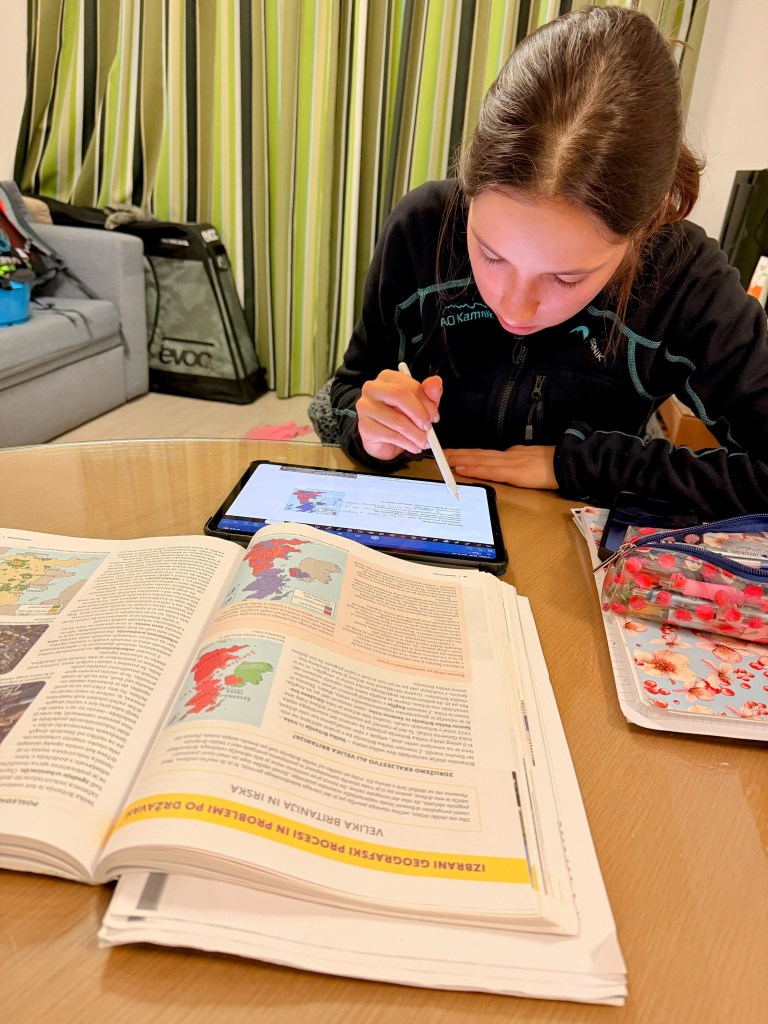
After training comes studying or tutoring. More like tutoring in the sense of explanations, since my schooling is remote – I have to cover most of the material myself. Here, my teachers, the principal, and the best coordinator, Prof. Gutman, help me a lot. Without their support, this would be almost impossible.
In this pace, I often forget about my body – stretching, rolling, resting. I could save even more time if I learned to limit my use of social media. Sometimes I get unsettled by a post – for example, when I see competitors training while I’m resting. Rationally, I know that rest is training. But emotions sometimes complicate logic. I hope I’ll grow out of this. Or maybe it will always remain a little thorn in my side.
Zoom, training, Zoom, training
Training camps are not always postcards from Mallorca. This January we trained a lot. On top of that, I had school via Zoom and exams over Teams. Wake up at 7, follow classes, train, study, train again, then tutoring … By the end of the camp, I was completely exhausted – physically and mentally. I realized that physical strength alone isn’t enough. The mind is just as important. That was the first time I felt the importance of balance. But when school ends, the body breathes too. HRV (measured with the Whoop device, which I recommend to all athletes) jumps up, training numbers rise, and I feel lighter.
HRV (Heart Rate Variability) shows how different the time is between each heartbeat. A higher HRV usually means you are more rested, recovered, and your body is handling stress well. Low HRV can signal fatigue, overtraining, or mental strain. That’s why it’s such a valuable tool for athletes.
Recovery is not a luxury – it’s a condition
For me this means enough quality food for an athlete, enough sleep, hydration, regular massages and therapy. None of this is self-evident. There isn’t always time, energy, or motivation. I also have dark days. Days when it just doesn’t work. When the body refuses. When the head feels empty. In those moments, the people I trust are by my side – my family, an experienced nutritionist with a degree (not a one-month course), a physiotherapist, and a sports psychologist. Without them it would be much harder. They remind me that sometimes you need to take a step back to be able to accelerate again.
Responsibility on social media
Numbers on bike computers that some riders post online matter for coaches – not for the general public. Young athletes follow us, and often interpret things the wrong way. That’s why we must be responsible. On social media I see riders who quickly climb into the TOP 10, but day by day they are getting thinner. They risk long-term health for short-term results. They post calories burned and talk about having time for “coffee rides.” But that’s a bluff. Training is not a “coffee ride” – that’s for recreational cyclists or for the off-season. A Ferrari, if it wants to run at top revs, needs the best fuel – and plenty of it. The same goes for us.
Food is not the enemy. It’s a tool. Fuel. The condition for being good – and staying healthy.
Between climbs and sprints – two disciplines, one goal
Lately, I haven’t only been balancing school and sport – but also two cycling disciplines. Mountain biking and road cycling. MTB is more varied, with technical climbs and descents. Road is, for me, a game of tactics and speed. This season, I trained a lot on the road bike too. My first road race this year was actually at home, in Kamnik. The course suited me – full of climbs, no space for tactics. I won. And I caught the attention of the new selector, Mia, who invited me to a multi-day race in Austria.

A race that stays in your muscles
The Austrian race was a real school. Two stages of over 100 km, a time trial (which I rode on a regular bike and equipment), and a demanding final stage with a long finishing climb – my terrain. I finished 4th among juniors. In the second stage, I was unlucky – involved in a crash, and due to a severe calf cramp, I spent more than half a minute rolling on the ground. Three days later, my physiotherapist told me the muscle was still “hot.” But still – I liked the stage race. No tactics, full gas, all four days, from start to finish. I liked the feeling of complete emptiness after the finish line. That exhaustion that empties you – and fills you at the same time.
That’s why the shock was even greater at the National Road Championships in Celje 🇸🇮. Juniors and U17 girls started together, and I practically pulled the whole race, trying to break up the train and sleepy rhythm with attacks on every climb. The distance was too short (only 45 km!) and there was too much group tactics aimed only at me. For comparison, national championships for juniors abroad are at least 65 km long. In the end, I finished 4th – satisfied with my performance, disappointed with the course of the race.
That way we can only be the best in the village – abroad, they eat us for breakfast.
MTB is my freedom
On a mountain bike, the best rider wins. There’s no tactic – it’s full gas from the first meter. We all have the same conditions, no one can “hide.” That’s why I know MTB will remain my primary discipline for a while. It gives me more freedom. More honesty. More opportunities to prove myself. Especially now, when my life runs in two gears.
And even though I ride between extremes – between 5 a.m. trains and 5 p.m. singletracks – I’m grateful. Grateful to be able to do what I love. Success doesn’t come overnight, and the road to it is full of potholes. But if you do something with your heart – you find a way. Not excuses.
📚 Books travel with me everywhere, and there are many paths. Reading is my recovery ride for the head. My summer reading picks:
- Kilian Jornet: Nothing is Impossible
- Uroš Buh: MOHOpedia
- Irena Velikonja: Summer on the Windowsill
- Gustave Flaubert: Madame Bovary
Kolumna Maruše Tereze Šerkezi je bila ekskluzivno objavljena v reviji Bicikel, št. 125/2025 (str. 66–67). 👉 Ne zamudi celotne številke! Poišči revijo na prodajnih mestih ali naroči svoj izvod na www.bicikel.com.
Maruša Tereza Šerkezi’s column was published exclusively in Bicikel magazine, issue 124/2025 (pp. 70–71). 👉 Don’t miss the full issue! Find the magazine in stores or order your copy at www.bicikel.com.
 Maruša Tereza Šerkezi
Leave a comment